
White wines gain ground on a volcano famous for reds
By Stephanie Johnson
*This article was originally published on Wine & Spirits Magazine’s website in October 2022. All rights reserved.
Volcanoes harbor a sense of brooding power and looming danger that inspires fear and fascination. That’s particularly true of one as active as Sicily’s Mt. Etna, and it has helped drive the rapid rise in popularity of Etna’s wines. Two decades ago, it was a challenge to find an Etna wine on most American wine lists; today, any serious Italian restaurant offers multiple bottlings of Etna Rosso, the volcano’s smoky and lively red wine. Now it appears that Etna Bianco, initially a tiny sliver of the DOC’s production, is poised to write the next chapter in the volcano’s vinous history.
Etna owes its recent success to centuries of viticultural tradition. Vineyards prospered on the volcano’s slopes from the Greek and Roman eras until the late 19th century, when the combined disasters of a major eruption, two world wars and a global depression decimated Etna’s wine industry. Some farmers remained, producing rustic wines to sell locally by the liter, but a handful of producers saw greater potential in their volcanic soils and native grape varieties, spearheading the establishment of the Etna DOC in 1968.
By the turn of the 21st century, their efforts had attracted the attention of aspiring winemakers from outside of Sicily. One of those of newcomers was Marc De Grazia, proprietor of Tenuta delle Tere Nere. American born but raised in Tuscany, he built a successful business importing wine to the US market. During visits to Sicily he became excited by the potential of Etna’s ancient, terraced vineyards, and began buying parcels on Etna’s wilder, less developed northern slope, where gentle inclines and rocky soils favor the cultivation of Nerello Mascalese and Nerello Cappuccio, Etna’s predominant red grape varieties. He bottled his first wine from the 2002 vintage, and his early harvests, like that of most producers at the time, focused on red wines. According to De Grazia, “The north side was always considered great for reds, and where you make great red wines, you don’t plant white grapes.”
Although red varieties dominate the northern slope, farmers traditionally interplant some native white varieties, like Carricante, Catarratto, Inzolia, Grecanico and Minnella to co-ferment with Nerello Mascalese. The white grapes would help to soften the wine (the DOC still allows ten percent of white grapes in Etna Rosso, not a common practice but still found in some wines like those from Vigneti Vecchio, as noted in the tasting notes that accompany this report). In 2005, De Grazia began harvesting and fermenting those white grapes separately to make a small quantity of Etna Bianco. After tasting a beautifully pristine, 42-year-old Carricante, he was inspired to buck tradition and began planting Carricante in some of his north-slope parcels, leading to the production in 2014 of two single-contrada Etna Biancos, one from Calderara Sottana and another from Santo Spirito.
De Grazia’s increasing focus on white wines aligns with the growth of Etna Bianco as a category. While production of Etna Rosso has remained mostly level over the last five years, Etna Bianco has risen steadily. Figures from the Etna DOC Consorzio indicate production during the first half of 2022 at 1.25 million bottles of Etna Bianco, close to the 1.46 million bottles of Etna Rosso from the same period. Clearly, Etna winemakers have caught on to the fact that the market wants more white wine. “In Sicily, sales of my white wines have surpassed sales of my reds,” De Grazia said during a recent Zoom call. “I would need twice what I produce to meet demand.”
Producers have begun planting Carricante in earnest, but De Grazia points out that for many, this is new territory. “If you’re here on the north side, you know the best locations to make great red wine. Everyone is planting white now, but we don’t have the experience to know where the best places are for whites.”
Some argue that the best sites for Carricante lie not in the north, but on Etna’s eastern and southern flanks. That’s the position of Salvino Benanti, whose family belongs to Etna’s old guard, with a history of winemaking on Etna’s southern slope that reaches back to the late 19th century. Benanti’s father, Giuseppe, founded the family’s winery in 1988 and was a leader in Etna’s quality wine movement as well as an early proponent of Carricante-based whites. The family now produces four Etna Biancos, all 100 percent Carricante from vines on Etna’s eastern and southern slopes.
Exposition and elevation are always important in viticulture, but on a volcano the differences can be extreme. The Etna DOC forms a semicircle that wraps around the volcano’s southern, eastern and northern slopes between elevations of 1,300 and 3,280 feet above sea level (the hot western slope is deemed more suitable for growing pistachios than grapes). The eastern slope, particularly the area around the village of Milo, is quite steep and faces directly onto the sea, creating a very different microclimate from the north and south slopes. Constant sea breezes, little afternoon sun and nearly twice as much rain make it almost impossible to ripen red grapes here, but the Carricante-based whites are distinctive and age worthy, with low alcohol, high acidity and intense salinity. Benanti makes two of its Etna Biancos—Pietra Marina and Contrada Rinazzo—with grapes from this area, both carrying the Superiore designation, which is only allowed for wines from around Milo.
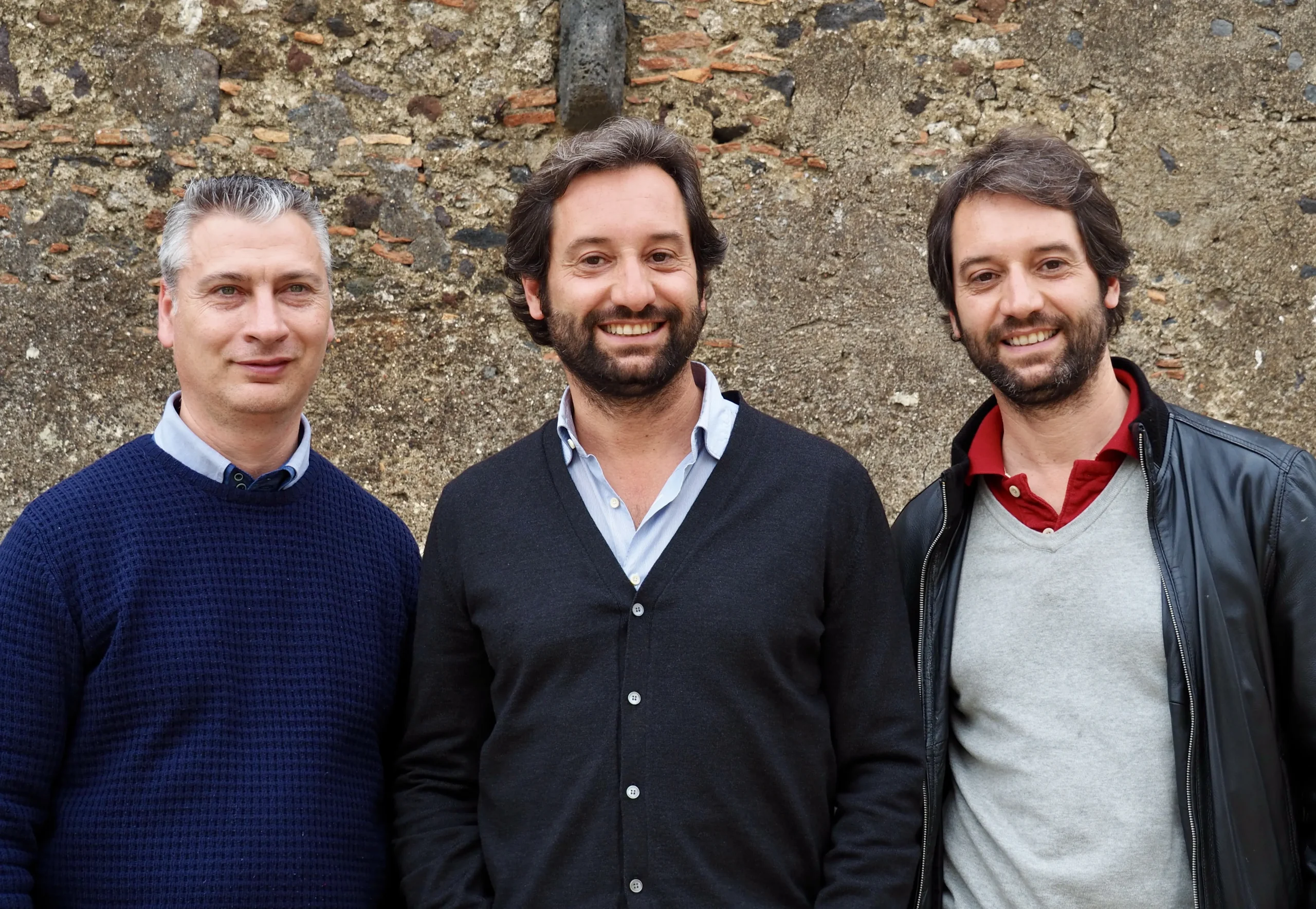
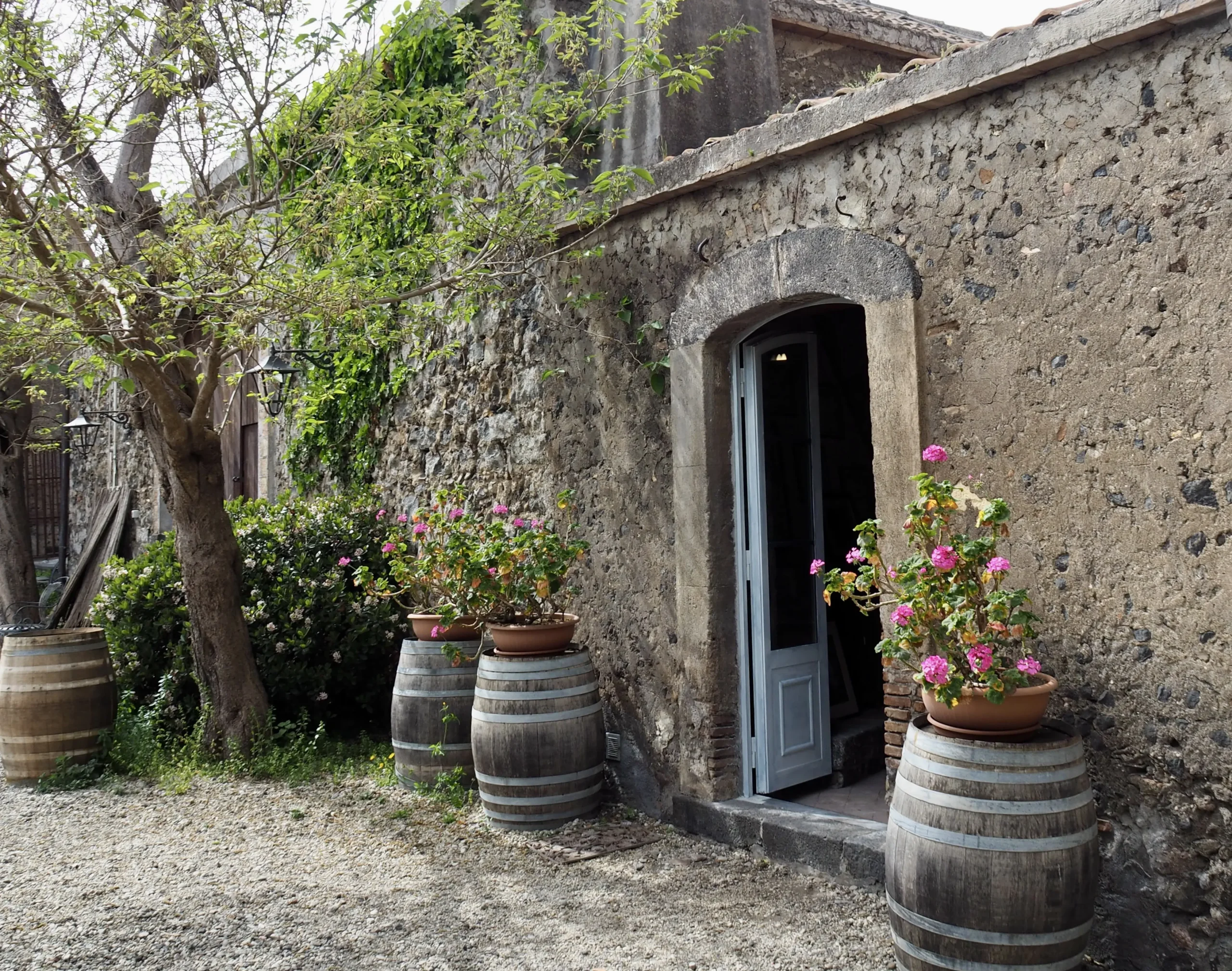
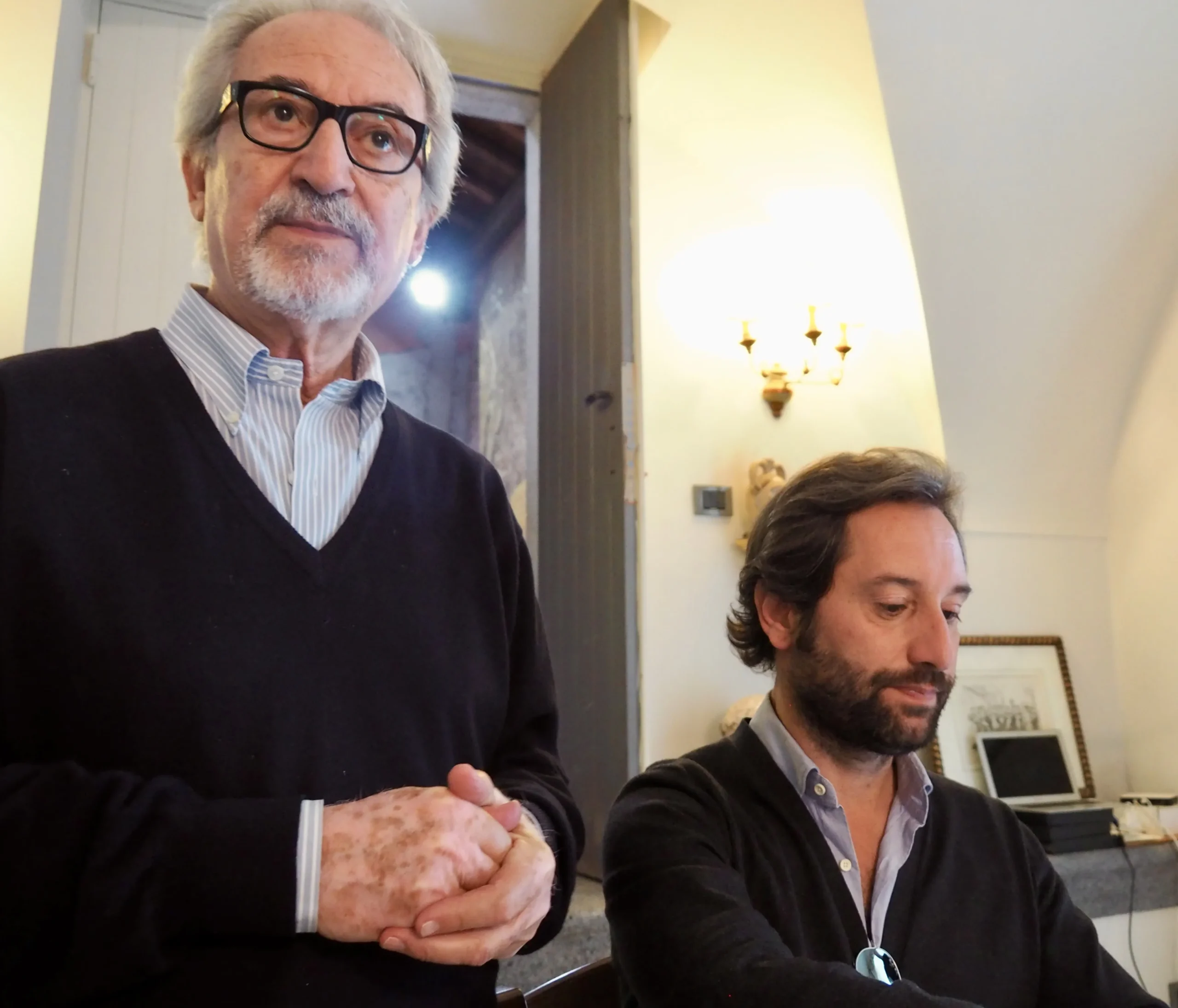
The Benanti family began bottling an Etna Bianco from Contrada Cavaliere on the southwestern slope in 2017, an area that Salvino Benanti describes as “a completely different world.” The vines are half a century old and reach up to 3,100 feet of elevation, about 500 feet higher than their Milo vineyards. Temperatures can swing 45 degrees from day to night, helping to preserve acidity on a slope that gets such abundant sunshine. Salvino finds the Cavaliere wines to be more generous and appealing in their youth, with some capacity to age, but not as elegant in the long run as wines from Milo.
Salvino describes the current situation on Etna as “a kind of gold rush, where everyone wants to make Etna Bianco,” but he points out that Etna Bianco and Carricante are not the same thing. He disagrees with the Etna Bianco DOC rules that allow producers to supplement Carricante with up to 40 percent of Catarratto and other native white grape varieties. “Carricante grown on the cooler northern slope tends to develop a sharper profile that scares some producers, so they blend it with varieties like Catarratto to soften it. On the eastern and southern slopes, Carricante ripens a bit better and doesn’t need the support of a blending grape. We only work on those slopes, and our Etna Biancos come from places where Carricante has always been grown, so we can afford not to blend.”
Beyond the option to blend, producers are making choices about vinification that are changing the profile of Etna Bianco wines. The Benanti family vinifies all four of their whites entirely in stainless steel. Marc De Grazia, on the other hand, ferments most of his whites in used barrels with full malolactic conversion, but he varies the amount of wood depending on the source of the grapes. Salvino Benanti is troubled by these differences in style and taste profiles, noting, “At the moment, it is difficult to ask a sommelier to define Etna Bianco. If this were a dictatorship, I would decrease the possibility to blend, and not allow oak fermentation and aging, or skin contact. Those are all things that interfere with Carricante’s ability to express.”
In 2019, De Grazia added two Etna Biancos to his lineup, one from a high-elevation vineyard on Etna’s southern slope, and a Superiore from vineyards near Milo. He now makes white wine from all three slopes and seems happy to embrace the differences. “I don’t think my Milo white will be better or worse, but it will be different. As far as making fine white wine, I think we’re getting there. As we discover the best sites and plant there, and learn to manage them, the wines will get better and better. But there’s still a lot that needs to happen here. The other night I had a bottle of Meursault and I don’t know if we’ll ever make wine that good.”